
Forty drones hit Ternopil in a single night. Not FPV drones. The kind that carry 90 kilograms of explosives. The kind that level city blocks.
The next morning, Andrii got up, drank coffee with his wife, and went to plant churches.
“After the worst night, you wake up and drink coffee with your wife and spend time with your kids and say: okay, new day. Life is good. God is good. Let’s do something important.”
This is what it means to be a church planter in Ukraine today.
Two Stories, One Mission
Andrii and Pavel (known to his friends as Pasha) grew up in different parts of Ukraine and came to faith through different paths, but ended up in the same place: planting churches together in one of the most challenging missionary contexts in the world.
Andrii was born in 1978 into a believing family in the Ternopil region. His childhood was saturated with church – his father led the choir, the house was never quiet, and faith was simply the air he breathed. As a teenager he pushed back hard against all of it.
“I said: when I grow up, I will not go back to church. Same traditions, same stuff, all the time.”
At 17, something cracked him open. He won’t call it dramatic. He just knew he had nothing worth keeping without God, and gave his life back. From that moment on, he was in ministry – starting in youth work, eventually joining YWAM, doing missions to Siberia, Russia, India, discovering what it meant to love the church beyond one denomination, one tradition, one way of doing things.
Pavel’s story started differently. Born in Kharkiv in 1992 to missionary parents who were always busy and often absent, he drifted as a teenager. Two events brought him back.
First: a close friend nearly died in front of him. Holding him, feeling life slip, Pavel realized with terrifying clarity: life is short, and where he was headed after it was not good.
Second: his father almost died. Pavel prayed a desperate bargain prayer – “God, if you save him, I give you my whole life” – and God held him to it. Not immediately. He tried to forget. But eventually he found himself at a Christian camp, surrounded by young people who were genuinely on fire, and something inside him recognized what real faith looked like.
“It wasn’t about tradition. It was about real faith. And I repented and gave my life to Jesus.”
From day one, he started serving. There was no waiting for the right moment.

Marriages Built in the Same Direction
Both men met their wives in ministry, and both describe marriages that are genuinely partnerships in calling.
Pavel met his wife Mary when she came to their newly forming church to study at the music university. She came to help with worship. He prayed: “God, if you give her to me, I’ll thank you all my life.” They’ve been married 13 years, have three children – Elijah, Erica, and Elijah (yes, two prophets in the family, as Pavel says with a grin) – and she is deeply prophetic. “To have a wife who fears the Lord and can hear his voice is a big blessing. And sometimes a challenge.”
Andrii met his wife while serving as a missionary. Their first date was, by any normal standard, absurd: they sat across a restaurant table and discovered they’d both felt God tell them separately that this was the person they’d marry. They talked about it openly. On the first date.
“God spoke to her too. So we basically decided right there to get married. Almost on the first date.”
They’ve been together for nearly 20 years.
The Spiritual Desert and What Grew There
The war in Ukraine didn’t start in 2022. It started in 2014, when eastern Ukraine first erupted. For Andrii, that was when the map of his region came into sharp focus.
“We looked at the map of the south of our region and realized: there are no churches there. A spiritual desert.”
A small group of leaders from different denominations came together with a single decision: let’s change something. We’re young, we don’t know how to do it. But let’s start.
They planted one church. Then another. Then more. Andrii calls it “local mission” – bringing a missionary mindset not to far-off nations but to the villages and towns just down the road. And when M4 came along with its emphasis on kingdom thinking over denominational turf, he recognized something he’d already been reaching for.
“I love how they think – kingdom, not just one denomination. That shaped my heart to work with different people and bring this variety.”
Pavel’s Bible Church of Reconciliation began seven years ago with a specific vision: not a big church, but a mission church. One that doesn’t just talk about multiplication – one that actually sends missionaries and starts new congregations.
“Before that, I’d never seen churches with that DNA in central Ukraine. We’re located on a major highway crossroads. People come through. And we want to send them out.”
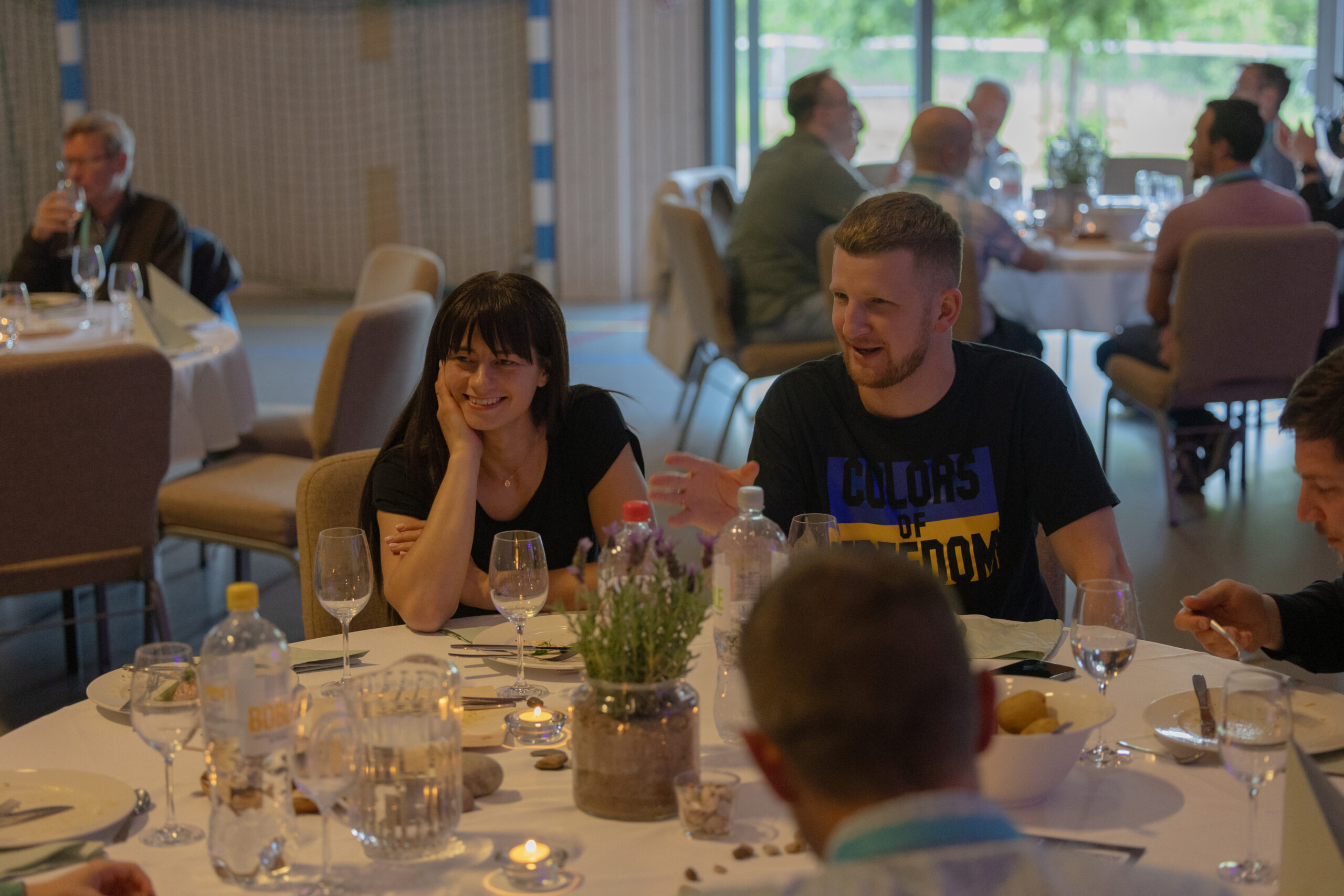
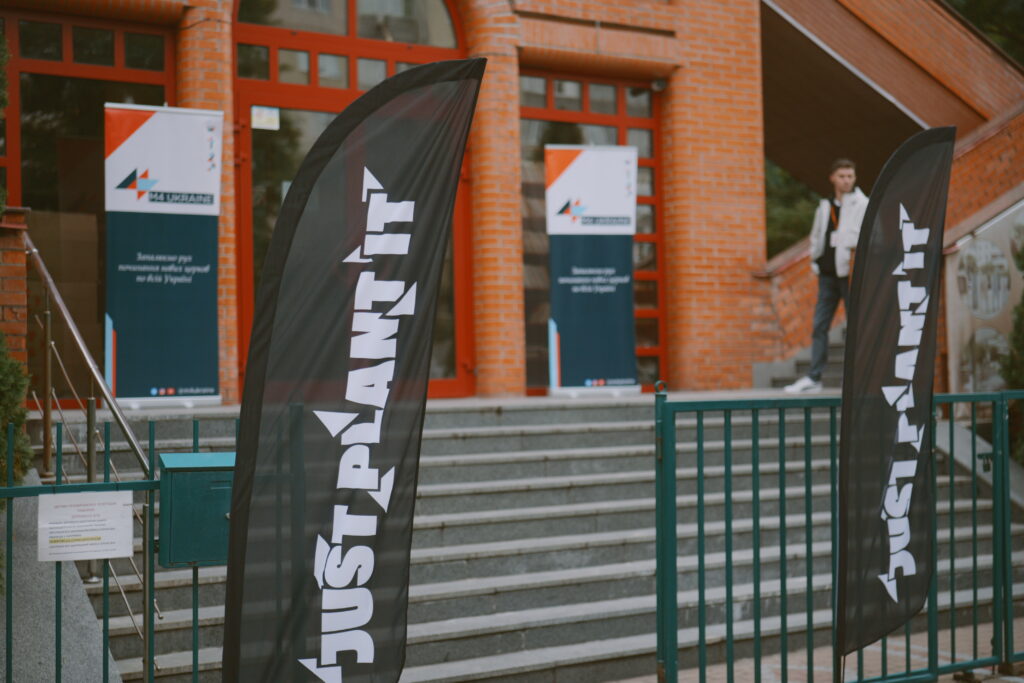
Their motto is simple enough to print on a t-shirt. In fact, they did: Just plant it.
40 New Churches During the Invasion
When full-scale war broke out in February 2022, the first instinct was to pause. To survive. Pavel was in the eastern city near Kharkiv, delivering food to civilians near the front lines, when a pastor pulled him aside.
“He said: we’ve just started 40 new churches.”
“Cann you repeat that? 14 or 40?”
Forty.
What had happened was disorienting in the best way: pastors and leaders displaced from the occupied south and east had moved into safer Ukrainian territory, and wherever they went, they brought the Gospel with them. People who had lost everything – their homes, their jobs, their sense of a normal future – were asking questions they’d never asked before.
“People try to find something important in their life. And if you’ve lost everything, you try to find something truly valuable.”
The war had done something to the church that years of program and effort hadn’t: it dissolved denominational walls almost overnight. Before 2022, Baptist churches did Baptist things, Pentecostal churches did Pentecostal things, and they kept their distance. Under war, that stopped mattering.
“People didn’t ask: what denomination are you? They just connected. And that helped us invite more churches into M4, because we’re not coming to tell them how to pray. We’re saying: let’s come together around what we have in common, and serve.”
Hope That Doesn’t Come in Pink
Ask either of them how they keep hope in a country where drones attack cities every night, and neither of them gives you a clean answer. Because there isn’t one.
Andrii is honest about this. The hope he carries isn’t the optimistic kind – the “everything will be fine soon” kind. He heard a pastor from the Balkans who’d lived through war say something he’s never forgotten: “When the war was over, it became more difficult.”
“I was just waiting for the end thinking everything will be fine. But what if it won’t be? We cannot find hope in the daily moments. Our hope has to be much bigger.”
For Andrii, the foundation is theological and very simple. Jesus wins. Already. Whatever happens on any given day or night, the ending is settled. That is not a way to avoid reality – it’s the only thing that makes reality bearable.
“I don’t want a rosy pink hope – the kind that disappears tomorrow. Something deeper needs to be there.”
Pavel adds a layer from something he saw while traveling near the front. In Kharkiv, 90 kilometers from active fighting, businessmen were building a shopping mall. During a war. Because they believed in the future enough to invest in it now.
“If unbelievers build business there, we need to build God’s kingdom. You will never lose when you build something that matters. So we decided: we’re also building a multifunctional complex in our city. For the church, for training leaders, for veterans.”
Because 1 million Ukrainian soldiers will eventually come home. And when they do, the church that served them now will have earned the trust to serve them then. The church that waited for better times will have nothing to offer.
“We don’t wait for better times. We serve right now.”
A Factory of Calling
As the conversation closes, Andrii offers a final image to anyone watching who is planting, or thinking about planting, or wondering if it’s worth it.
“A church is almost like a factory of calling. You have no idea who will walk in. Maybe you will disciple someone who will change the history of a nation. The most beautiful calling you can have is to disciple people, bring them to the Lord, and let him change lives and areas and cities through them. So don’t give up. Work hard. Have big expectations.”
Pavel is more direct.
A woman asked him recently why he’s still in Ukraine. He has three kids. He’s legally allowed to leave.
“I said: because I have a calling from God. And if you have a calling, it doesn’t matter what the circumstances are. Calling is what really means something in our life.”
He pauses, then adds the words they’ve printed on t-shirts and written on their hearts.
“Life is short. Even in the safest country in the world, life is short. Please do what you can, through your calling, for God.”
Just plant it.