
A Romanian who had never seen a golf course in his life ended up working at one in Williamsburg, Virginia. He was the only one of four friends whose paperwork went through.
Across town that same week, a young American woman was filling out her very first international mission trip application. The destination: Romania. She had never met a Romanian.
A few days later, a Romanian walked into her church.
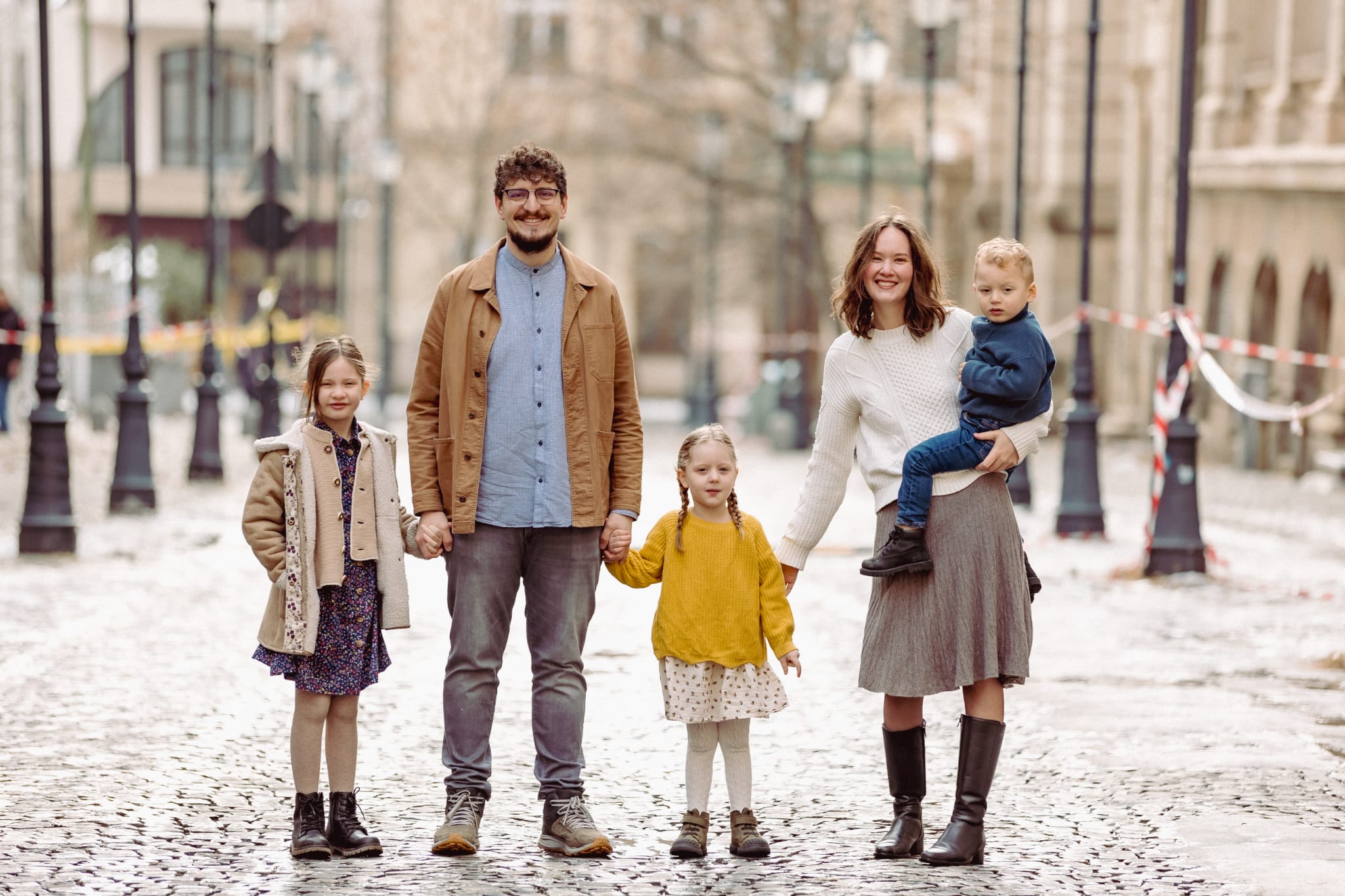
This is how Gabi and Emma’s story begins. Years later, married with three small children, they would move to Constanța on the Black Sea coast, a city where you are roughly twenty times more likely to meet a Muslim than an evangelical Christian, and start planting a church together. But before that, there are two stories, told from two ends of the world, slowly working their way toward each other.
The Comfy Following
Gabi was born just a few months before communism fell in Romania, into a Christian family of six kids and a country still wrestling with what life after communism would look like.
“It was an honour-shame culture pretty much still,” he says. His parents raised the kids in the faith, taught them about Jesus, and lived out what they preached. From the outside, Gabi was the perfect pastor’s kid: youth group, Bible studies, all the right answers.
On the inside, he did not know Jesus at all.
That changed when he was 17, in a Romanian village, of all places. His youth group had decided to take a church planting class, and one summer they went out to share the gospel in rural areas. They never planted a church. But Gabi met an old lady working a field, tried to evangelise her, and quickly realised he was just as lost in religious motions as she was. The Holy Spirit started working on him instead.
“And from then on, my life started to change,” he says.
What followed was an odd kind of obedience. Gabi watched his father pastor six churches, seven at one point, gone all day, all week, all year. He looked at that life and made a quiet deal with God.
“I told God: I’ll follow you. But my way. The comfy way.”
He calls it now “the comfy following.” Spoiler: God had other plans.
Gabi went on to study theology in Bucharest, what he calls Romania’s “underground degree” at the time, before heading to Southeastern Baptist Theological Seminary in Wake Forest, North Carolina. The dream was to come back, get a PhD, and teach theology in a Romanian classroom. Gradually, gently, God began to redirect that path.
A Missionary at Six
Emma grew up in the United States, in a Christian family. She knew God was holy and she was not. The pressure of trying to balance the scales was crushing.
“I lived in a lot of fear,” she says.
The Sunday it finally clicked, she was somewhere around her hundred-thousandth Sunday school class. The gospel landed: not balance, but grace. Christ’s righteousness, not hers. Years of fear gave way to peace and freedom.
Almost immediately, something else clicked too. Emma was five, maybe six years old, when she heard about people who had no church. No one to tell them about Jesus.
“And I just thought: people need to hear this. I want to be a missionary.”
That conviction did not fade. It quietly waited, through school years, through her college decision, through every step toward adulthood. Her first chance to live it out internationally came one summer, when she heard about a mission trip opportunity in Romania for the following year. She began filling out the application.
And then, a few days later, on the other side of an unlikely Atlantic detour through a Virginia golf course, the Romanian walked in.
A Romanian, a Virginian, and a Golf Course
The mechanics of how it happened are almost comically intricate.
Three Romanian friends came to Gabi in Bucharest with an idea: let’s go work in the U.S. for the summer. Gabi was reluctant. They got him to apply anyway. Out of four applicants, his was the only paperwork that went through.
“I was given a job at a golf course in Williamsburg, Virginia,” he says, still laughing. “I’d never seen a golf course before.”
Before going, he started emailing pastors in Williamsburg, hoping to find a church family for the summer. Only one replied. That pastor happened to be Emma’s pastor. Gabi started attending. Emma’s parents, meanwhile, were doing what loving American parents do when their daughter is about to travel to a country they have never heard of: scrambling to learn anything they could about Romania. They were thrilled when a real Romanian appeared at their church.
“At the time that he walked in,” Emma says, “I had just submitted my application to go to Romania.”
They were married seven years before they finally moved there.
Seven Years, Then Romania
Cross-cultural marriage is one thing. Cross-cultural marriage with three small children, in a country where one of you is a native and the other is not, is something else entirely.
Emma remembers the early days in Romania, sitting in rooms where her husband was telling jokes and she was understanding maybe a fifth of the conversation.
“It was isolating,” she says.
And yet, she is quick to add, the Lord went before them. There were moments she and Gabi looked at each other and said: this is so much better than we had expected.
The hard parts were not always about language. They were about what counted as right, what counted as wrong, and what was simply different.
“It’s interesting how little we are aware of how much of our culture we have brought with us,” Emma says. “How much is something I believe genuinely biblical, and how much is it just something I am accustomed to?”
Strangers parenting their kids on the street was one example. Why isn’t your kid wearing a hat? Why are you letting them cry? Emma had to learn quickly that in Romania, raising children is a community effort, whether you signed up for it or not.
For Gabi, the strangeness ran the other direction. He had spent enough time in America to become less Romanian. He had not spent enough time there to become American.
“I belonged nowhere,” he says. The return to his own country was its own kind of culture shock.
What kept them grounded was a shared conviction that ministry was not something one of them did while the other helped. It was a lifestyle the whole family lived out together. Doubled burdens, Gabi calls it. And doubled blessings.
Constanța, At the Edge of the Black Sea
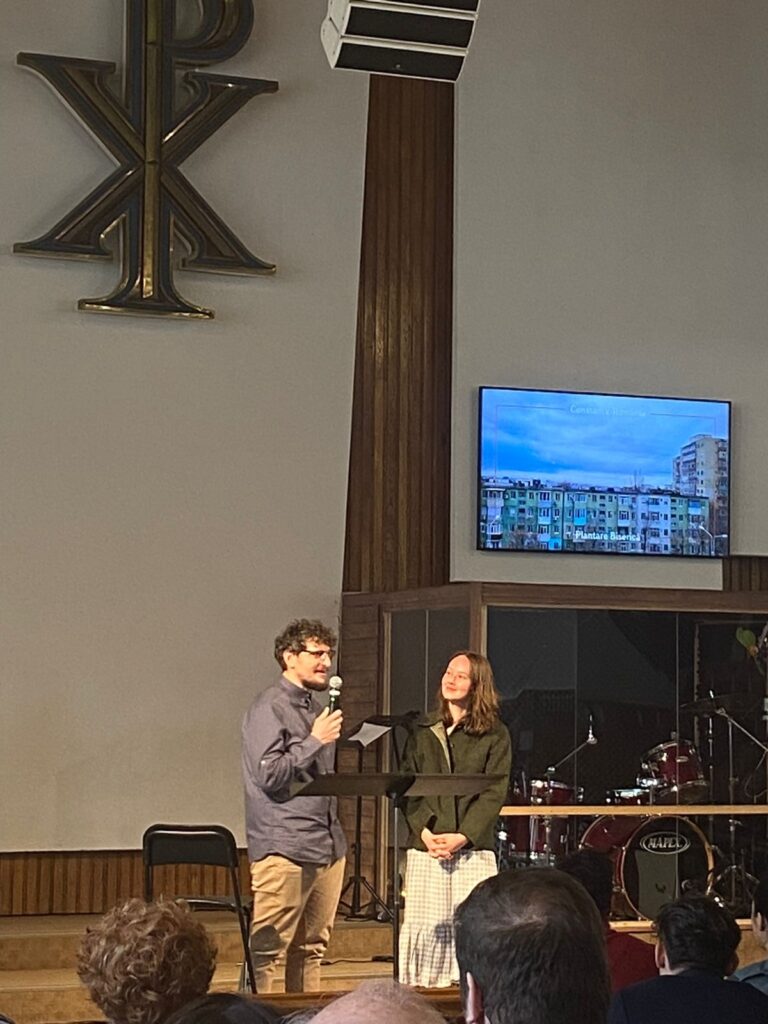
While they were preparing to move to Constanța and looking for local partnerships, they connected with a pastor named Neluțu, based in Bucharest. He invited them to partner with him and the church there. The idea was to spend a year or two in Bucharest first, build a team from their community, and then move with the team to Constanța to plant a new church.
Constanța is Romania’s biggest tourist city, opening to the Black Sea. It is a place where mysticism, secularism, and Islam all collide.
“You are twenty times more likely to meet a Muslim in our region than an evangelical Christian,” Gabi says. The Muslims they meet are largely secular, more interested in life’s pleasures than in religion. The wider population is shaped by a religious tradition that often feels hopeless to those inside it. Gabi and Emma are trying to address all of it.
About an hour from Constanța lies Babadag, a town with a large Gypsy-Turk community. Gabi calls it one of the darkest places he knows. Children growing up with cigarettes in their hands, abuse on the streets, a different world entirely from anything Westerners imagine when they picture Romania.
And yet, in Babadag, something strange happens. Tell people you will be doing something in half an hour, and they show up. They want to hear.
“We see how open they are to the gospel,” Gabi says. In the darkest places, ground the Lord seems to have prepared.
The Princess and the Wannabe Church Planter
Ask Gabi and Emma to tell stories from the field and you get the funny ones, the painful ones, and the ones that are both at once.
There was the children’s camp last year, where an eleven-year-old boy desperately wanted to be on the team his older friend was on. Emma told him no, you stay on the team you were assigned. So he switched name tags with a tiny girl when no one was looking and wore hers proudly for the rest of the day. The tag said “Princess.” He could not read it. He committed anyway.
There was the man in Babadag who came to Gabi with beautiful words about wanting to plant a church in his home, to be a light for his clan. The next morning he disappeared. He had told everyone he was going to England for agricultural work.
Weeks later, the police came looking for him. Turns out he had not gone to England. He had gone to Norway. He and his nephew had stolen a car, ended up in a chase, and he was now waiting in a hospital bed to be deported.
“This is our church plant,” Gabi tells the story with a tired smile. “It is going great.”
These are the moments, he says, that no church planting book prepares you for.
Step Back and Pray
If there is a single lesson that Gabi and Emma keep returning to, it is patience.
“For me, it has been: step back and pray,” Emma says. “We strategise. We plan. We try to make things happen. But the fruit, the kind that lasts, that is for him to bring.”
Gabi puts it differently. He calls it the difference between the romanticised view of church planting and the real one.
“You read the books. You think your story is going to look like the ones in the books with small differences. Then you stand in Constanța, and you realise: this only happens if God makes it happen.”
They knew it in theory, he says. They believed it in theory. But standing in their own city, watching their own plans bend and break, they have had to learn it for real. If God makes it grow, it grows. Otherwise, all the planning in the world will not make a single thing happen.
What gives them hope is the long view. Romania, Gabi says, will one day see a culture of church planting. A culture of multiplication. Churches that plant churches that plant churches. Disciples that make disciples.
“That is my hope for Romania right now.”
It’s His Church, Not Yours
Asked what they would say to a young couple or family sensing a call into church planting or cross-cultural ministry, Emma answers without hesitation.
“If the Lord is calling you to plant a church, go for it. He is absolutely worth it.” Then, softer: “And do not forget. It is his church. Not yours.”
Gabi’s parting word is for anyone who has been told their story has to be the special, exceptional, headline-worthy one to count.
“Christ is worth it because of who he is. Choose faithfulness in the small things. And let God do the rest. It is all God who does it through us.”
It is his church. Not theirs. They keep showing up. They keep being faithful in the small things.
Everything else, they say, is God’s to grow.